
How to Create a Simple Transition Practice Between Parts of Your Day
Aug 12, 2026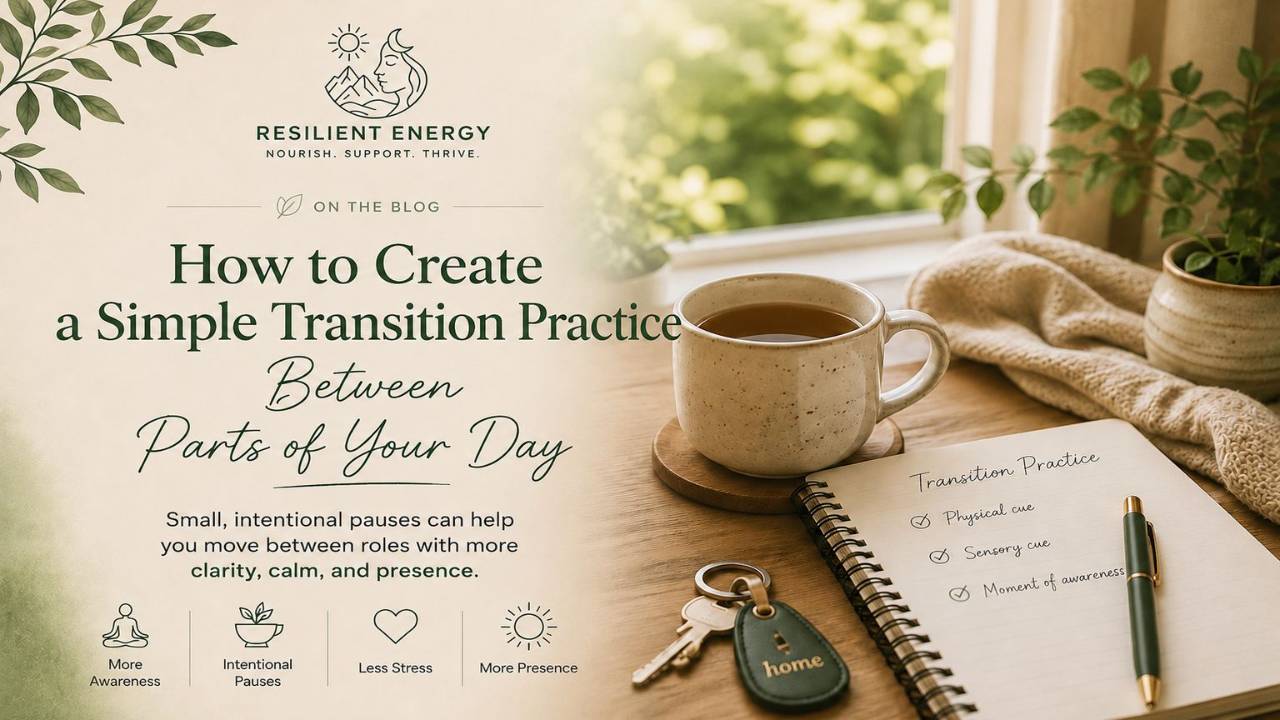
Sometimes one responsibility ends, but we do not have time to fully register that it has ended before the next one begins.
Work moves directly into commuting. Commuting moves into caregiving, preparing dinner or completing household tasks. Later, the evening begins moving toward sleep while our minds are still carrying unfinished conversations, decisions and responsibilities from earlier in the day.
The challenge is not always one part of the day by itself. Sometimes it is moving between several different roles without any space in between.
A simple transition practice can create a small pause between what was and what comes next.
What is a transition practice?
A transition practice is a brief, familiar action that helps mark a change in your day.
It does not need to be an elaborate routine or take a significant amount of time. It may be something you already do, but begin doing with greater intention.
For example:
- Changing your clothes after work
- Washing your hands or face
- Placing your keys and belongings in their usual spot
- Making a cup of tea
- Opening a window or stepping outside
- Playing familiar music
- Taking a few slower breaths
- Softening the lighting as the evening begins
The particular action matters less than the meaning it begins to hold. With repetition, it can become a familiar reminder: this part of my day has ended, and I am entering the next one.
Why transitions can feel difficult
Our roles can change more quickly than our attention does.
You may arrive home while still thinking about work. You may begin preparing for sleep while mentally reviewing everything that needs to happen tomorrow. You may move from caring for other people into the small amount of time available for yourself without knowing what you need from it.
There may not always be an opportunity for a long break. A transition practice does not require one. Its purpose is simply to introduce a little awareness into a moment that might otherwise pass automatically.
Create a transition practice with three simple elements
1. Choose one physical cue
Begin with an action that marks the change physically.
You might change your clothes, wash your hands, put down your bag or sit in a familiar place for a moment.
Choose something that fits naturally into your day. A transition practice is more likely to feel sustainable when it builds upon something you already do rather than adding another complicated task.
2. Add one sensory cue
A small sensory change can make the transition feel more distinct.
You might:
- Open a window
- Step outside and notice the air
- Make a warm cup of tea
- Play a familiar song
- Turn off a bright overhead light and use a softer lamp
Choose something accessible and supportive within your actual environment. You do not need a perfectly calm home or an uninterrupted evening to create a sensory cue.
3. Include one moment of awareness
Pause briefly and notice where you are.
You might release your shoulders, take a slower breath or ask yourself:
What do I need as I enter this next part of my day?
The answer does not need to lead to a major change. You may simply notice that you need water, nourishment, quiet, movement or a few minutes without making another decision.
Awareness gives you an opportunity to respond more intentionally when your circumstances allow.
Keep it brief and repeatable
A transition practice does not need to transform your entire evening.
During demanding seasons, especially while working, caregiving or raising a family, a long routine may not be realistic. Two intentional minutes can still create a meaningful pause.
Your practice could be as simple as:
- Putting down your belongings
- Changing your clothes
- Taking one slower breath before beginning the next task
It may not make every transition effortless. It can, however, give you a moment to acknowledge that something has shifted and consider how you would like to enter what comes next.
Let the practice change with your capacity
Your transition practice does not have to look the same every day.
On one day, you may make tea and sit outside for ten minutes. On another, you may only have time to wash your hands, release your shoulders and take one intentional breath.
The smaller version still counts.
Sustainable well-being is not always about maintaining the same routine regardless of your circumstances. It can also mean creating practices that adjust as your time, energy and responsibilities change.
Begin with one transition you experience regularly: arriving home, finishing work, beginning your evening or preparing for sleep.
Then choose one simple cue that could create a little more space between what was and what comes next.
You do not need to change the entire day. Begin with the transition in front of you. 🌿
Resilient Energy is for educational and wellness purposes and is not a substitute for personalized medical advice.
Ready to Go Deeper?
The Resilient Energy Method™ is a five-module, self-paced course designed to help you understand your patterns, respond to stress more intentionally and build supportive practices that fit into everyday life.
Begin With Five Minutes
If you would like a simple practice to return to during a stressful or demanding moment, download your free 5-Minute Calm Practice.
You'll also receive the Resilient Energy Note, with thoughtful reflections and practical tools to support a calm mind, steady energy, and sustainable well-being.
No spam. Unsubscribe at any time. For educational purposes only. Not medical advice.